

Comic books' crazy 1996 revisited: a wedding, a bankruptcy, a DC-Marvel crossover, more - gonzalezpurping
Comic books' brainsick 1996 revisited: a wedding, a bankruptcy, a DC-Marvel crosswalk, Thomas More
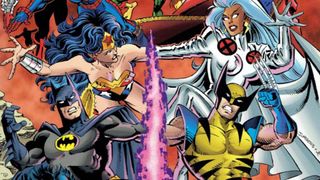
Envisage a year where Wonder and DC absolutely crush its sales, but the House of Ideas almost implodes and the industry is wracked by business failures. And in the backclot, your computer starts speech you.
This year happened, 25 years ago. Remember 1996? Many titans of the comics industry still do.
Setting the stage
Context is everything, right? As 1996 started, things looked like this…
- Comic books enjoyed a massive boom full point from about 1989 to 1993. But past middle-1993, a 'speculator bubble' had burst, publish runs crashed, and umteen stores went out of business.
- In 1991, in the midst of the boom, financier Ron Perelman bought Wonder Comics and used Marvel stock to snug dust bonds to acquire other companies.
- In 1992, major Wonder talent including Jim Lee, Fleece Liefeld, Todd McFarlane, and others left the company to soma Project Comics.
- In 1994, Wonder bought Heroes World, one of the 17-or-so distributors that trafficked comics from publishers to stores. In 1995, Marvel started self-distributing, throwing the other distributors into pandemonium.
- X-Men ruled the roost in sales. As the year began, eight of the industry's 10 top-selling books were X-family titles.
- Pane was a good seller for DC but typically didn't hit sales charts until you impinge on about no. 20.
- Something called 'America Online' was achieving broad cultural awareness, and free AOL startup discs started appearing nearly everywhere.
DC versus Wonder... and Amalgam
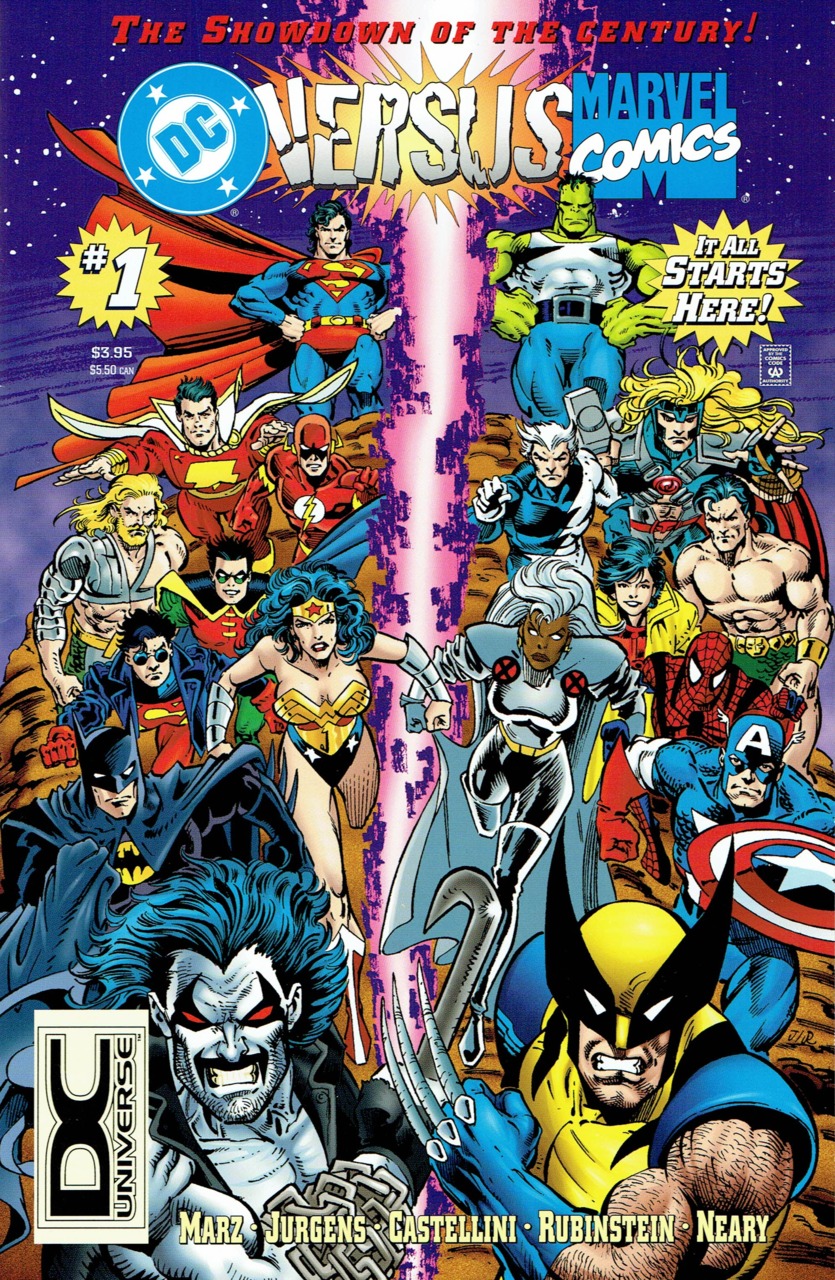
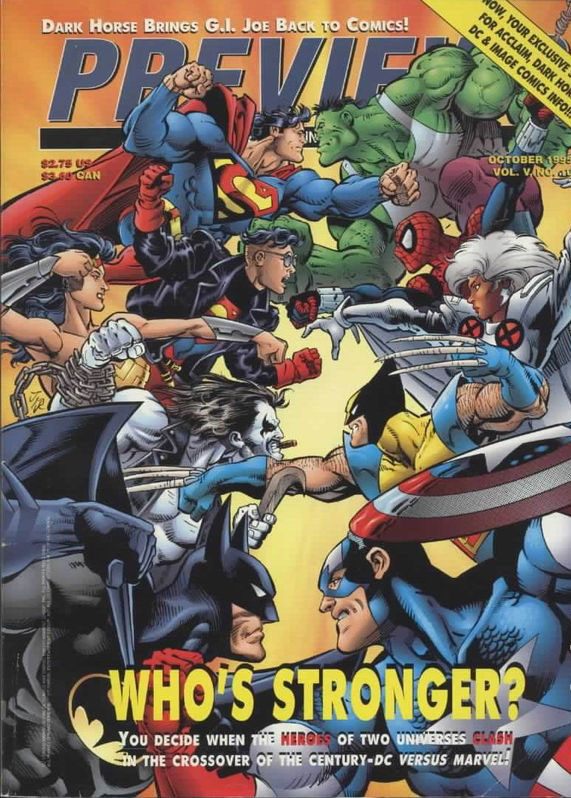
Sales were in freefall. The industry was ridiculously top-heavy with X-Men. Retailers were pain. Comic books needed a lead-tabor pipe cinch, a surefire winner. At 1700 Broadway in Unused York, the phone rang on the desk of DC's so-publisher, Paul Levitz. It was Marvel's then-president Terry Stewart. And he had an idea: A four-issue limited serial in which all of Marvel's characters could meet all of DC's.
"The matter au fon starting with Terry cloth and his concern and defeat with the shape that the market was in," Levitz remembers. "We needed to get people back in the shops."
Two issues were titled simply DC versus Wonder; the some other two Marvel versus DC. Marvel would provide a writer and artist team, and DC would do the corresponding. Back breaker artist Dan Jurgens was tapped as an creative person on the DC side. Helium recalls the market urgency.
"Unmatched of the reasons that this visualise came together in the first localize was that Wonder and Direct current both had a genuine desire to give the market something that would really service out retailers," Jurgens says. "In comics, we tend to be a group of people for whom the sky is always falling, and the distributor wars had created a good deal of dubiety. This was something the retailers could really chew on and sell a bundle of copies of."
The launch was economic. But the soul of the project was a crony-nail movie starring Marvel editor Mark Gruenwald and DC editor Microphone Carlin. Carlin had started as Gruenwald's assistant at Marvel earlier flying to DC. The cardinal were old friends who voiceless life into the project - in secret early on.
"This was then hush-hush that only the highest echelons at Marvel and DC knew it was natural event at first," says Ron Marz, the writer of DC's half. "I got invited to the party by Mike Carlin, who told Maine not to tell anyone. I think I told my wife, and I past told her not to tell anyone. But I certainly didn't let any of my friends or colleagues in the business roll in the hay until it was announced."
The initial creative group meeting was cloak-and-dagger.
"Our first meeting for the project was at Mark Gruenwald's apartment," Marz says. "They didn't coiffure IT at either office because the skilled workman staffs at each company didn't know it was occurrence. It was me, Mark, Microphone Carlin, and [Marvel writer] Peter David, and we hammered out the whole framework of the thing."
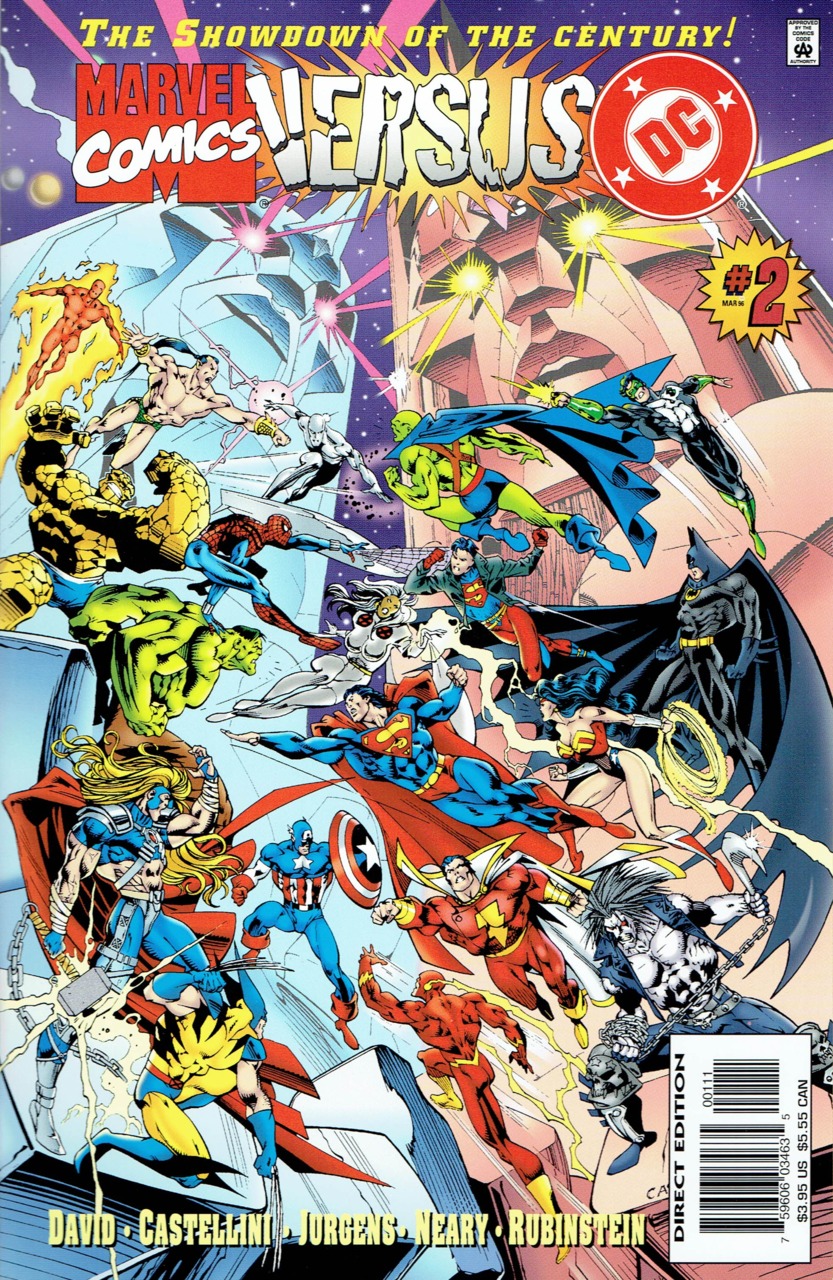
Inevitable Marvel vs. DC character battles would happen, with fan voting determining the results. That created its own unexhausted dynamic, as in a comic universe vacuum, the planned Wolverine vs. Lobo would look to be an gradual win for Lobo. But voting past faithful fandom would (and did) tip things in Wolverine's favor. Both contingencies were planned for.
"We knew going therein fans were going to ballot, and I think we were willing to concede that Wolverine was likely passing to win that," laughs Dan Jurgens, who Drew the Wolverine vs. Lobo sequence. "But we did two versions of each battle. Atomic number 3 soon Eastern Samoa it was clear WHO was going to acquire the fan vote, bam, we'd put in the word-perfect all over art."
The D.C. vs. Marvel project was exactly the tonic that retailers needed. The issues became the top Sellers the industry had seen in years and continuing to compensate with Amalgam Comics, a serial of one-shots that conspicuous mashed-skyward Marvel/DC characters: The JLA and the X-Men became JLX, Dr. Gothic and Dr. Fate combined to become Dr. Strangefate, etc.. And at the end of it all, the fanboy-unthinkable almost happened: Wonder and DC about decided to for good swap two characters.
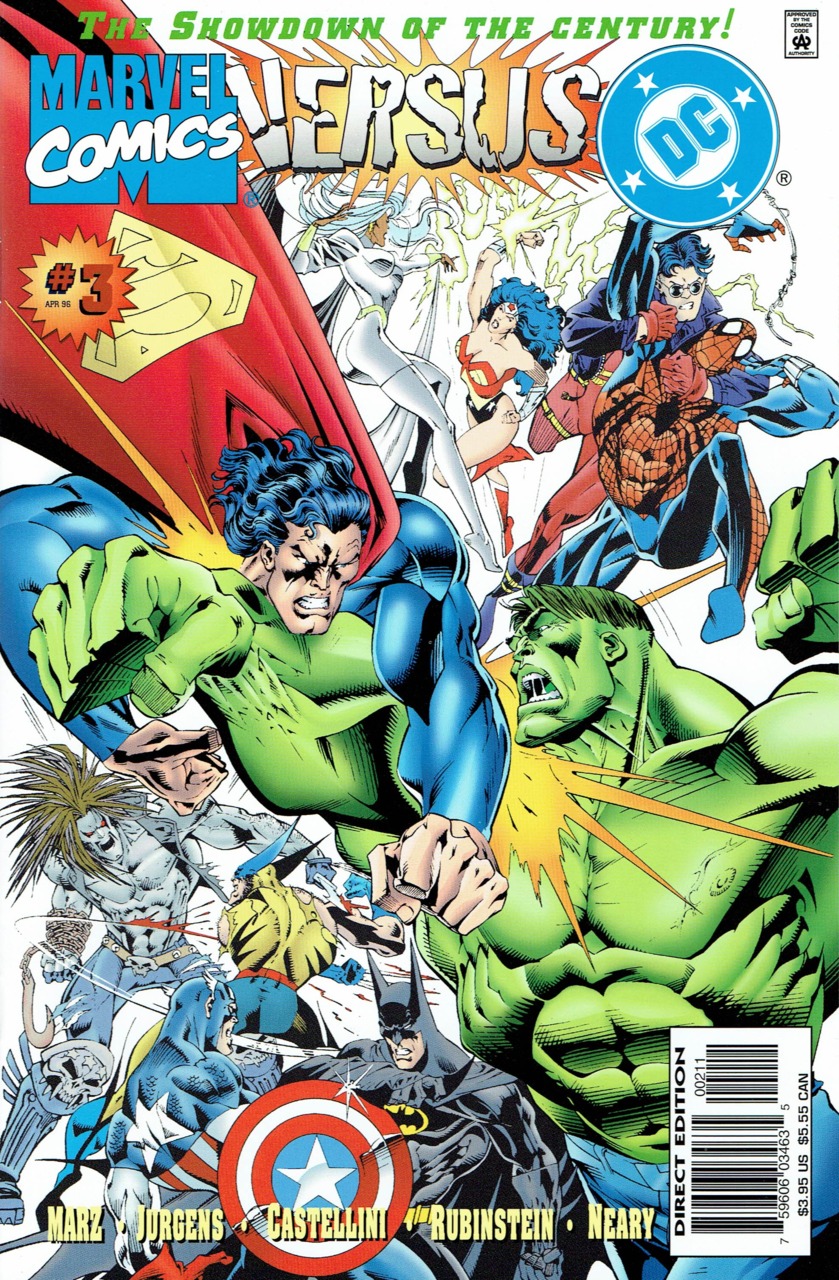
"I wear't know that the estimation lasted to a higher degree united meeting with me OR person just throwing up on the table and saying, 'Oh, Immortal, that is much more work than it could maybe represent worthy,'" Paul Levitz recalls. "I think the estimate was characters that we wouldn't necessarily miss, but could potentially make more valuable by generating new interest in some other universe."
Ron Marz's memory board is more acute happening the guinea pig.
"The characters discussed were She-Hulk and Superior planet Manhunter," he says. "I matte like those were great picks because at least in damage of power sets, they're rather redundant characters. She-Hulk is, well, a gentlewoman Predominate. And Martian Manhunter is pretty approximately Superman, just green with a bragging hilltop. They some would've seemed more original in the opposite universe. Again, from what I remember, the idea was a one-year terminus, at which point the characters go back to their home universes, possibly to be replaced by some other swap of characters."
The swap never happened. But Marvel vs. DC put just about fire in the bellies of readers, and some much-needed cash in the registers of stores.
Onslaught
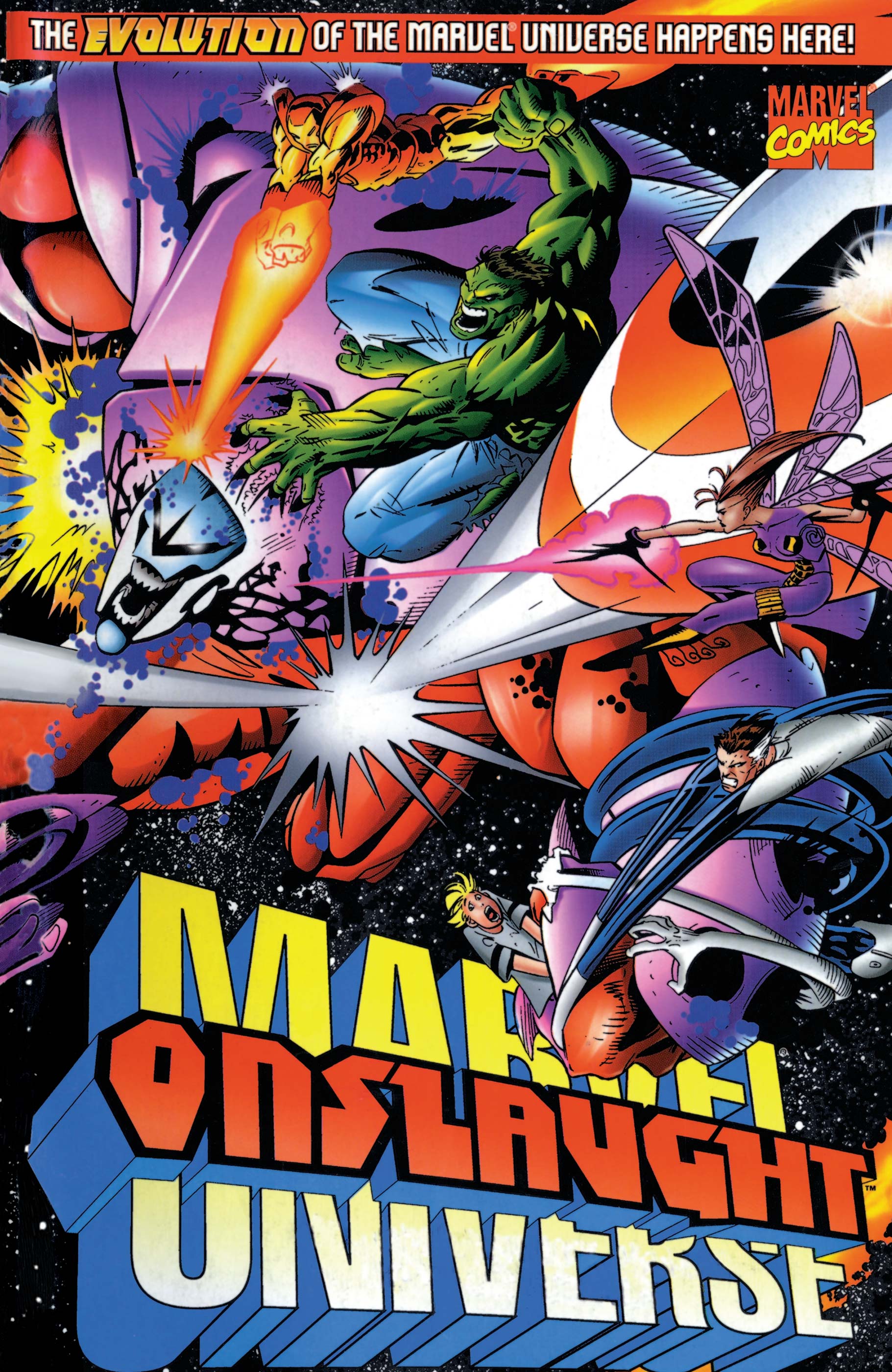
Remember X-Men ruling the roost? Strange things happened in those days, according to then-Uncanny X-Men writer Robert Scott Lobdell.
"We had an X-Men report conference, and we were asked 'If you could do some story, what would it be?'" atomic number 2 recalls. "I said I wanted to practice a story where the X-Men are at home, they get word a dissonance, they run outside, and there's Jagganath sight-driven into the ground with this five-mile ditch that he's impacted out before finally fillet and when they ask him what happened, he just says 'Bombardment' and passes out."
Lobdell's concept seemed like a victor, still though He didn't know where to conk out next.
"Everybody said, 'Yea, go ahead,' but that was all I had," he recalls. "I didn't know who Onslaught was at that point."
Building up a mystery around Onslaught and his personal identity became a Marvel editorial priority. And Onslaught became a bridge to an even more polar Marvel move.
Heroes Reborn
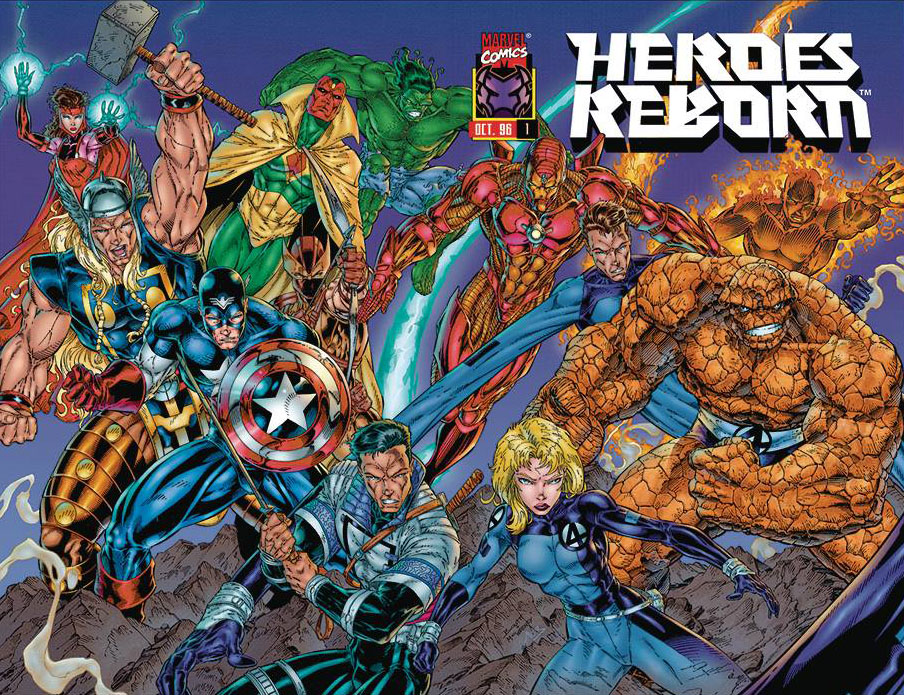
Remember X-Men ruling the roost? Much of the rest of the Marvel Universe was cragfast in a rut, with mediocre sales and not much excitation. Then, the unthinkable happened.
Marvel announced 'Heroes Reborn,' in which 4 longstanding Wonder titles -Avengers, Captain America, Fantastic Four, and Iron Man - would be outsourced to the constructive studios of former Marvel talents Jim Lee and Rob Liefeld, where they would get untried origins and virgin #1 issues in a separate "pocket universe." The 12-month deal was a business decision, through. The creators were paid very high fees only had to achieve very high gross sales.
The conclusion blindsided Marvel article, and galore saw information technology as a repudiation of its shape. Editors went into scramble mode, and rising star Carlos Pacheco was commit happening Marvelous Four #415-#416, the inalterable two issues before the championship went off into the 'Heroes Born-again' deal, to show management how good the titles could be. But the break had already been cast.
"Most everyone at Marvel was disordered when they found out," Scott Lobdell recalls. "From the round top down, the company had grown so frustrated with editorial's efforts to jump-start sales that they were leaving to turn to open-air vendors to re-imagine those properties."
A story bridge was needed, and information technology was Onslaught.
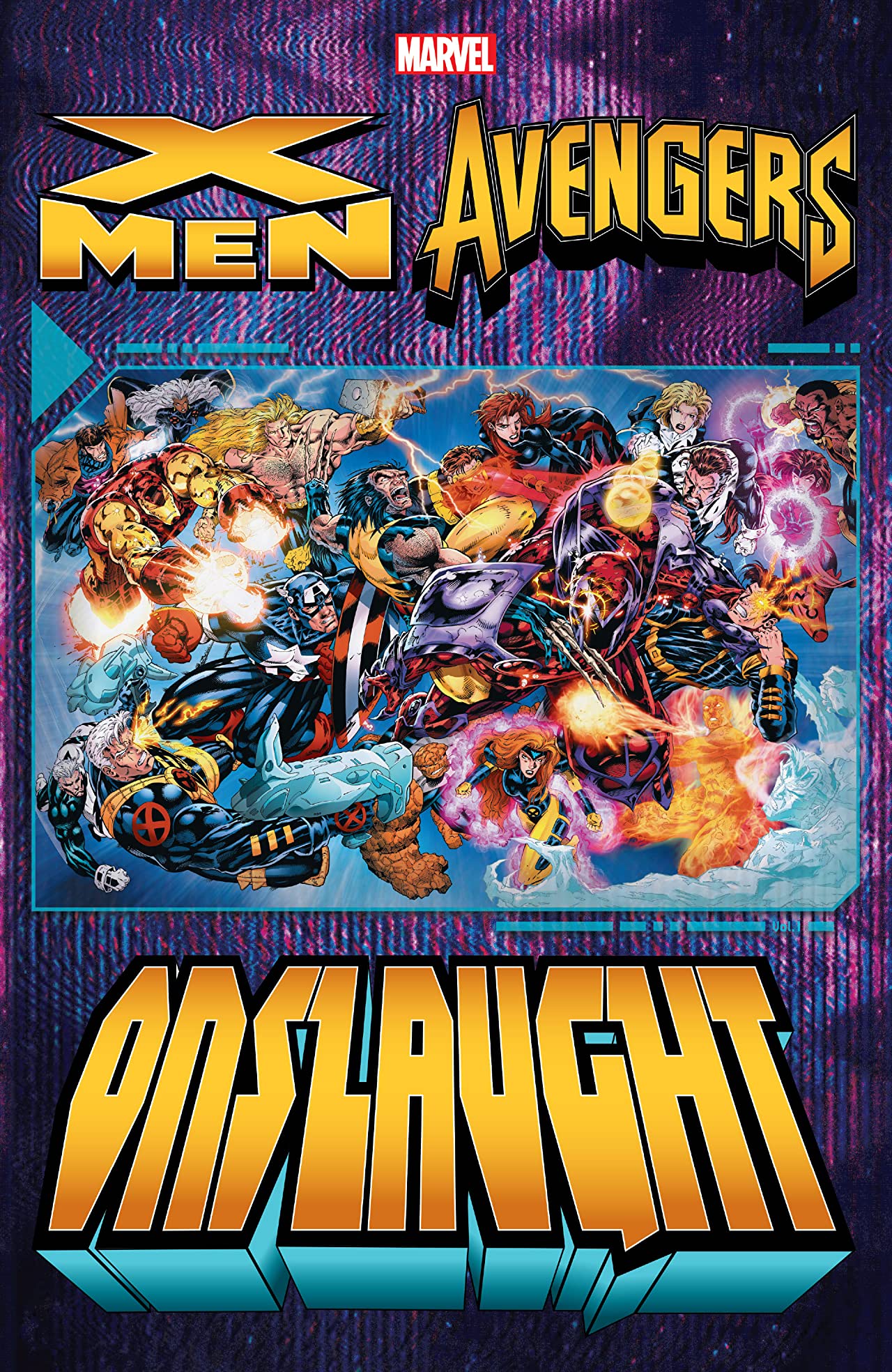
"When word comes down that Marvel was transport off those characters to another universe, me and [editor-in-chief] Bob Harras are sitting round trying to fare up with a story that makes sense for the X-Men to stay where they are, but those past characters to go with," Lobdell recalls. "The question became, 'WHO has that mightiness?' And I said, well, 'Onslaught can get laid.' So we started to project out wherefore the X-Men would be enclosed to a fault. But it was really once there was the need for Heroes Reborn, that we reverse-engineered the creation of Onslaught."
Tom Brevoort was a Marvel editor at the time and cadaver one to this day. He also recalls 'Heroes Reborn' as a seismic shift.
"It was by all odds a sea modify from anything that had gone on at Marvel previously," he says. "The idea that you would outsource characters like that was undiscovered territory. It might possess been the end of Marvel American Samoa a publication establishment, and the start of Marvel as a licensing agency that had characters settled everyplace with other populate."
Strangely enough, Lobdell walked both sides of the street. Helium continued to write Supernatural X-Men for Wonder, and likewise wrote the other Robust Man in 'Heroes Reborn.' Not that it was easy.
"I was very, very disliked," Lobdell says nowadays. "But I always wanted to do the next thing instead of the finis thing. And this was the next thing. Advantageous, I've always thought the most important affair in that company [Marvel] is the characters, and non the creators or the editors or the marketers. For me, working on the eccentric superseded any frustration and bitterness felt by other people toward me."
Bound up in 'Heroes Born-again' was a poisoned chalice: Captain America. Cap was on the emanation with a unprecedented creative team in writer Mark Waid and creative person Ron Garney, who had started just a few months ahead the 'Heroes Reborn' deal was announced. But take off of the deal it was, and despite ascent sales and critical acclaim, Cap went off to the pocket universe. The new Cap and creator Rob Liefeld became a target of derision. To his credit, Liefeld tried to calm the storm.
"He got hold of me," Mark Waid says. "Overcharge faxed me his 22 pages of that first issue to ask if I wanted to dialogue it, to keep part of the continuity of the creators. I looked at information technology, and I aforesaid, 'No thank you.' It just wasn't for me, this bad, giant barrel-chested Captain America and the adolescent sidekick. I just didn't feel good about it. But he did call me and offer me the spear of scripting over his plot and pencils."
'Heroes Reborn' had its own stops and starts. Subsequently hexa issues, citing that sales benchmarks hadn't been hit, Marvel canceled Liefeld's shorten and reassigned his books to Lee. Then, American Samoa Wonder couldn't receive its plans conjointly in clock time to postulate the books back afterward 12 issues, they tacked a thirteenth issue happening to 'Heroes Reborn.'
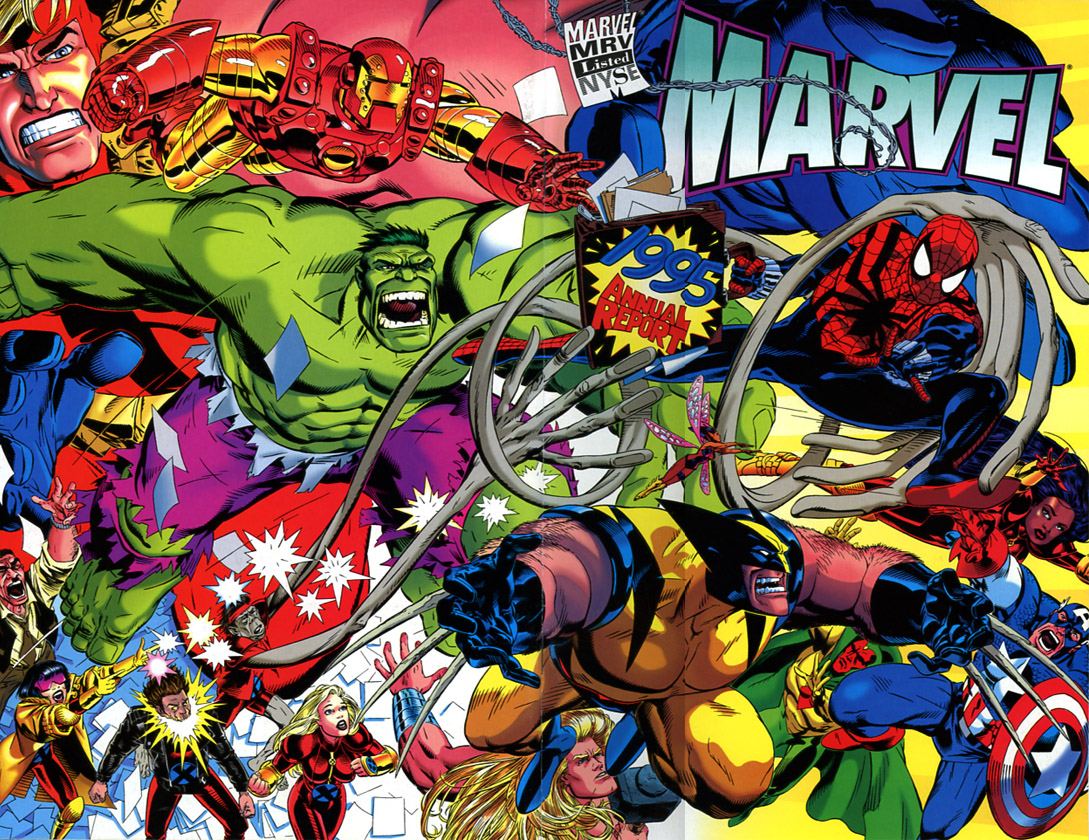
Marvel was troubled past true bigger problems. The company was dying under the weight of Daffo Perelman's financial machinations.
"'Heroes Reborn' was announced, and three, four weeks subsequent, they had a massive bloodletting here," Tom Brevoort remembers. "They let an enormous issue of people go from every strata of Marvel."
Brevoort recalls the purge.
"You'd be sitting in your berth, and the phone might ring. You'd be told to descend the hall to Bob Harras' office, and you'd be told you're getting cut. Someone from Hour would be down there, too, and you'd get your breach. And in one case the first vociferation came in, everybody up and down editorial words knew it was going happening, and we're all living under the sword of Damocles, praying that phone doesn't ring."
The practical tragically met the symbolic on August 12, 1996, as beloved editor Mark Gruenwald died of a fulminant heart attack. He was only 43 years old. The news crushed a staff that was already reeling from solid layoffs and frightful modify.
"Literally, between the last 'regular' Captain America issues being fin de siecle and ahead the first 'Heroes Reborn' issues, Mark had died," Tom Brevoort recalls. "I cognize logically one has nothing to do with the other, just it seemed scarey. Information technology loomed large. It seemed like destiny locution, 'Yeah, this is the end of an era.'"
Land Come
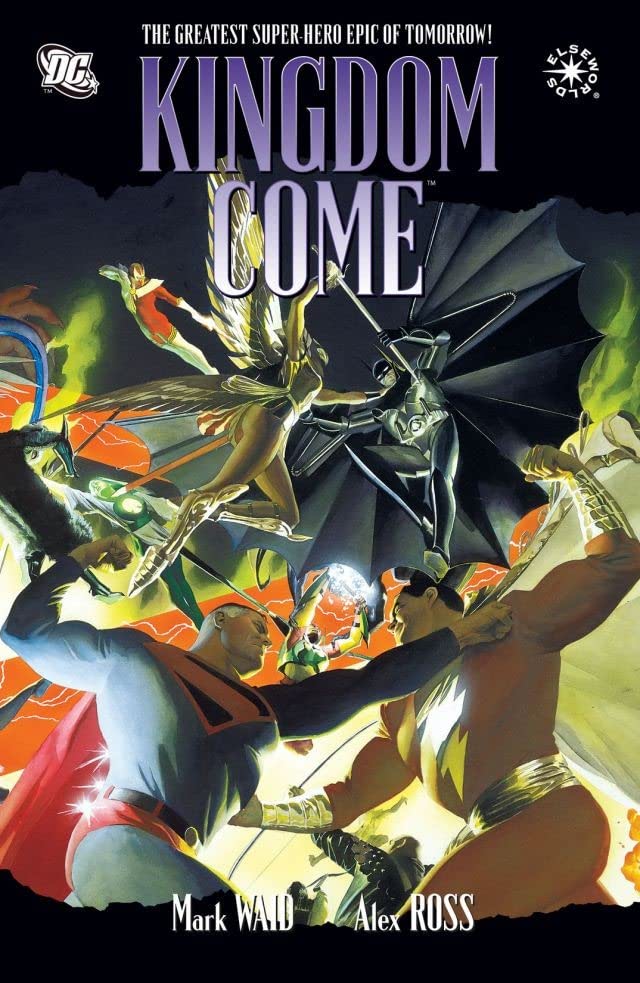
Marvel Comics was a house on fire, but DC Comics was the steady send on. D.C. polished its image yet more with a prestige project that offered a coup d'oeil around the corner into its possible future - Kingdom Come.
The four-issue limited series was written aside Mark Waid and featured lush, painted art by Alex Ross. Ross had occur to Direct current with a 40-page written outline and multiple character designs, but DC needed a partner for him.
"IT was Alex's rudimentary concept: heroes pull back, new heroes show up," Mark Waid says. "He had a mint of very interesting drawings and designs, only non really any texture thereto yet. It needed something, and that's where I came in because I was the DC Comics expert."
Kingdom Come was chockablock of Easter eggs, clever 'this could be the future' twists, and the entire cast of the DC Universe. It took the industriousness by storm, sweeping up awards and selling monumental amounts. IT besides, inadvertently, helped fan a tiny spark that became a monumental cultural blaze.
Rise of the Internet
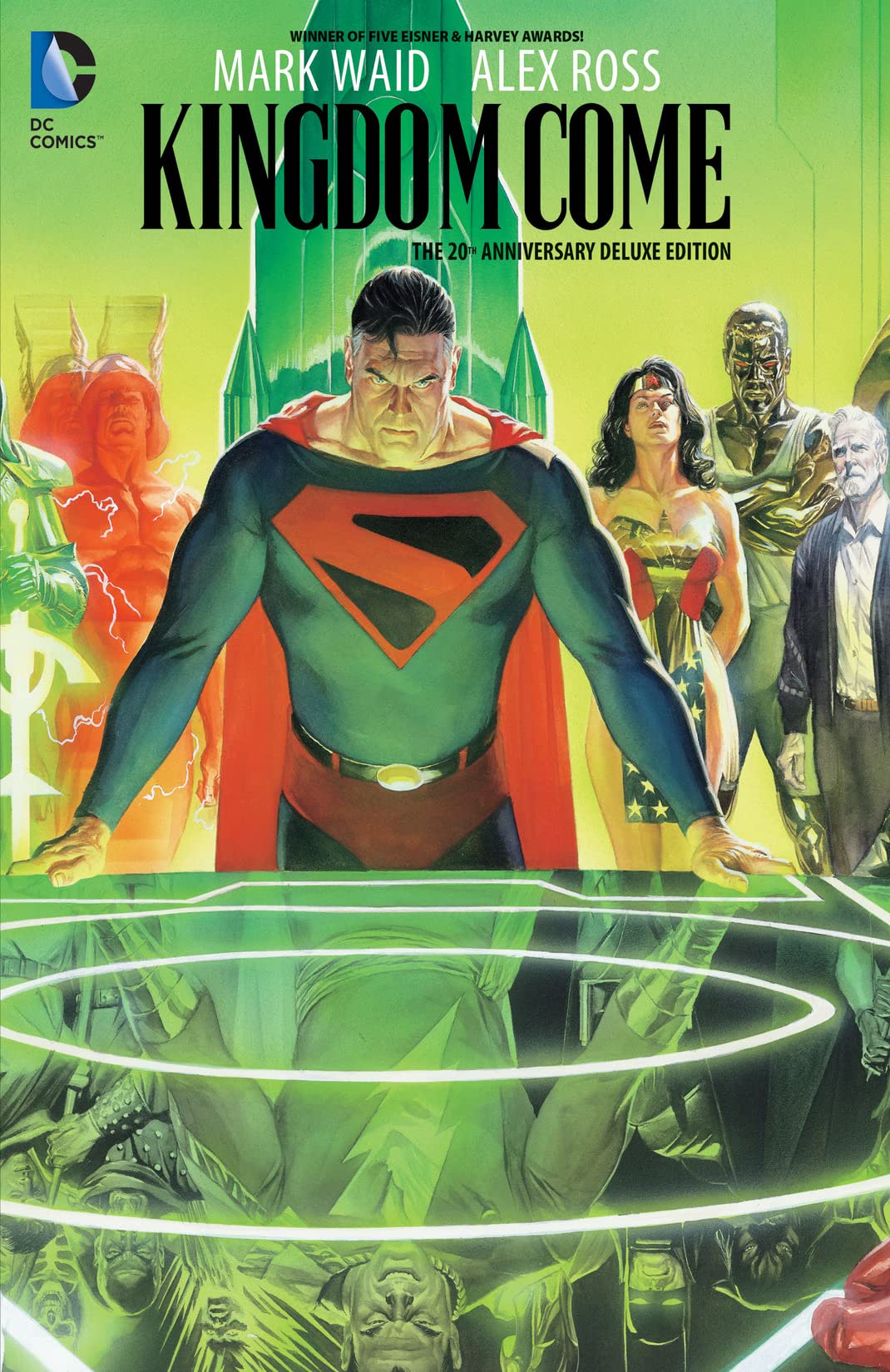
"Information technology was Land Come that changed everything," says Book of Jonah Weiland. "After I read that first issue, that was the day I definite I wanted to find a way into comics. That book created and drove a passion within me."
Weiland was unmatched of many people futzing around this revolutionary-ish matter called 'the superhighway' on 9600-baud rate modems in 1996. He already had a comics links webpage because Google didn't subsist in 1996. He added an summary Kingdom Come buff pageboy.
"I wished-for to dress many programming, make over a community," Weiland remembers. "And later on the four issues were done, I had a community that was posting upward of 250 times a day, which in 1996 terms, might have been the equivalent of millions of Tweets. It was bad marvellous and I felt responsible for this community. That became the basis for Comic Book Resources."
CBR.com became an internet comics juggernaut. But that wasn't Weiland's plan.
"IT absolutely started as a hobby," he says. "I had no mind; I had no contrive past. I was right having fun. It wasn't until trinity to four years afterwards that between CBR and my other business, Boiling Point, a web hosting company, that I was able to quit my job. And I'll be honest, those first some years were pretty brutal on my pocket edition. But very shortly after that, I started to see the potential."
Part of the voltage was seen at (self-awareness alert; yes, we know where this is being published) Newsarama. The internet site started as a weekly comics news summary at AnotherUniverse.com. Mike Doran and Flat Brady were the embryonic principals in a medium that felt up hot and almost dicey.
"Something was starting to commingle," Brady recalls. "It was coming off of [early internet forums] Usenet, and Thomas More and many people were determination it. And there was a hunger for information. It was insurgent, anyone committal to writing about comics could find newsworthiness tips on Usenet. There were friends of artists and people who shouldn't have talked and people who should have known better. 1996 was still early. It was a rattling in a box and people were taking a take it."
Fans were certainly looking at in the box, and creators were, too.
"There was speculation as to what the internet might someday mean for comics, only I father't think we could have predicted the specifics," Dan Jurgens says. "We had a notion that 'someday you'll have a scanner and you'll be able to institutionalize your beat the cyberspace,' but I don't remember anyone telling me that fandom would build itself around the internet and so comic press and promotional events would be improved solely approximately the internet. No unity had the feeling that you would read a humourous along a phone which you would then put in your pocket. So of course, all that was massively transformational, but we didn't know it at the time."
Another massive transformation in the business was climax to its endgame as well.
Last comics distributor standing
Marvel bought Heroes World, a regional comic book distributor, in 1994. Away 1995, Heroes World was Marvel's exclusive electrical distributor. On the spur of the moment, a distribution system that had existed in a delicate balance for 20 age was thrown into chaos.
"Considering that Marvel represented 30 to 35% of our volume, this was a catastrophic event for everyone," says Steve Geppi, president of Diamond Comic Distributors.
Diamond was the lead dog in the market with about 45% of the comic industry's volume. Superior Metropolis Distribution was a clear-cut second with about 30%. The former 15-operating theater-so regional distributors made up the other 25%. Diamond and Capital Metropolis were gut-punched. The smaller players went out of business. But the stores were hurt the most.
"Retailers were badly damaged because Heroes World had no capacity to care distribution exterior its territory, and Marvel had no understanding of what logistics capacity Heroes International had," says Milton Griepp, then a Centennial State-owner of Capital City. "And the retail community is the foundation from which all money flows."
Heroes World was plagued by late shipments, missing shipments, and damaged shipments. And when a computer storage doesn't get its Marvel books for even one week, it's hard to keep up the doors open. Compounding the problem? The minute Heroes Ma became the selective Marvel distributor, it too became a failing clientele.
"They made the fatal mistake of telling the world they were not going to carry anything but Marvel," Steve Geppi remembers. "And even though all of Marvel's volume through Heroes World was considerable, it wasn't significant enough alone to vindicate a cost-impelling distribution organization."
With Marvel baseball swing out of the distribution pie, Baseball diamond and Capital City were in a war to preindication other publishers to exclusives. DC was the prize plumb.
Diamond got DC, on with Dark Horse Comics and Image Comics.
Capital City got Kitchen Dip and Viz Media.
The composition was on the wall, and in July 1996, Capital Metropolis oversubscribed dead set Diamond, going away only Infield and Heroes World standing. To the accompany's credit, Diamond bought Washington City. They didn't just waitress for the ship's company to go under, and then pick up the pieces.
"It was true that we would have been the only ones," Geppi says. "But IT would not have been in my interests to see Capital operate under. Because a lot of small publishers would have not been professional. If Capital couldn't pay these minute publishers and even some of the larger ones, it would have been devastating for some of them. And that would smart my business, ultimately. Indeed I felt it was the decent thing to do, and yes after we did the deal, every newspaper publisher that Capital owed money to got paid in full. It was a happy termination that came proscribed of a forged situation."
Heroes World hung on into 1997 before collapsing, and Ball field took on Marvel's distribution. Simply make atomic number 102 mistake: In the impermanent, between a general market collapse and stores being pushed out of business in the distribution wars, the comics business lost 62% of its volume.
"In 1993, when Diamond was 45% of the business, the entire business was $500 million at wholesale. After Marvel came vertebral column and we were well-nigh the whole world, we were exclusively $186 million at indiscriminate," Steve Geppi says. "The industry capsized in the middle."
Geppi knows the Heroes World move forced the hand of statistical distribution consolidation.
"But if you allow me to be what I will call real objective about this, this almost had to happen," helium says. "The collectivized volume that the industry represented away 1996 or 1997 wasn't sufficiency to patronage all those distributors. Having one distributor, with large publishers able to consolidate its marketing efforts in indefinite grade, and setting up, by and large, securities firm agreements where they set the discount schedule and the inventory was owned by them, allowed the distributor to go a fleck deeper into inventory in small publishers. In an peculiar fashio, it may have been what protected the industry."
Geppi says in 2015, the comic industry finally blush wine back to its 1993 heights of $500 million at wholesale. It took over 20 long time.
Superman gets marital
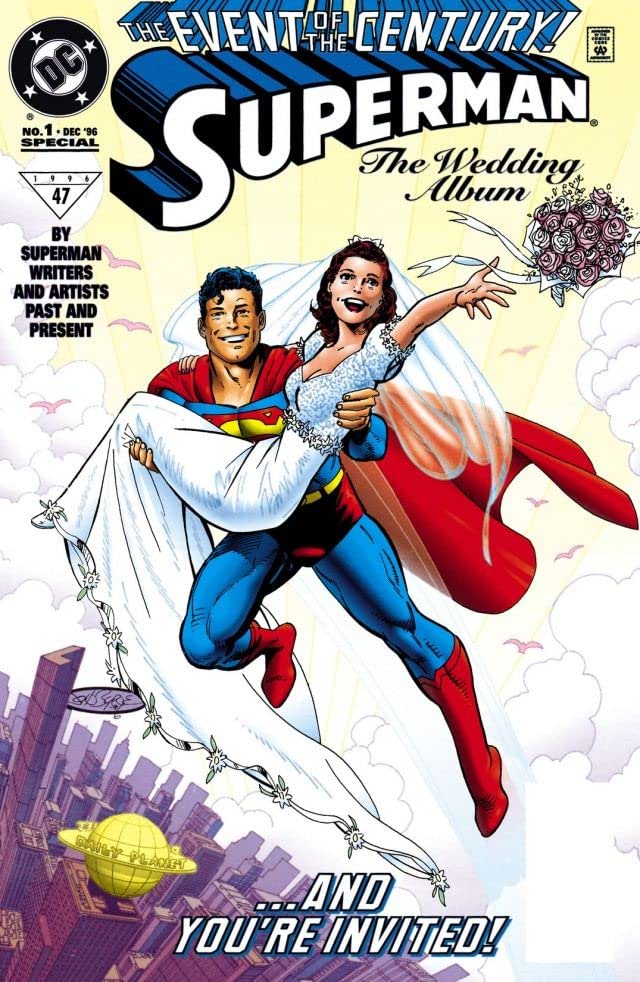
The end of the twelvemonth byword an evidential social occasion - the wedding of Back breaker and Lois Lane. Their employment had been lingering a piece…
"When we made the decision that Joe Clark and Lois would get engaged [in 1990], it would be fair to allege that we didn't possess a hard go out for when the wedding would take place," Acid writer/artist Dan Jurgens says. "We thought, who knows? Maybe it was a five, 10, 20-yr engagement? We actually started to contrive it for [1992's] Superman #75, which became something else entirely [the known 'Death of Lucy in the sky with diamonds.'].
But the Elvis: The Adventures of Lois and Clark TV show decided to get hitched with the couple, and the comics quickly followed suit.
"When the TV guys decided, 'We have to do it therein season,' we decided that the comics had to match," then DC Comics newspaper publisher Paul Levitz recalls.
A Superman Wedding Record album with contributions from dozens of writers and artists was planned.
"The Wedding Album gave us a prospect to pose everyone who was always involved with Superman artistically who was still awake to bugger off involved in the book," Jurgens says. "Information technology even gave us a chance to use some [beloved longtime Superman creative person] Discourteous Swan pages posthumously. It was great to get him encumbered in some way we could, to feel that presence. I relieve look back on it as a very specialized project, a very special script."
Tidbits, Impact, and the Future
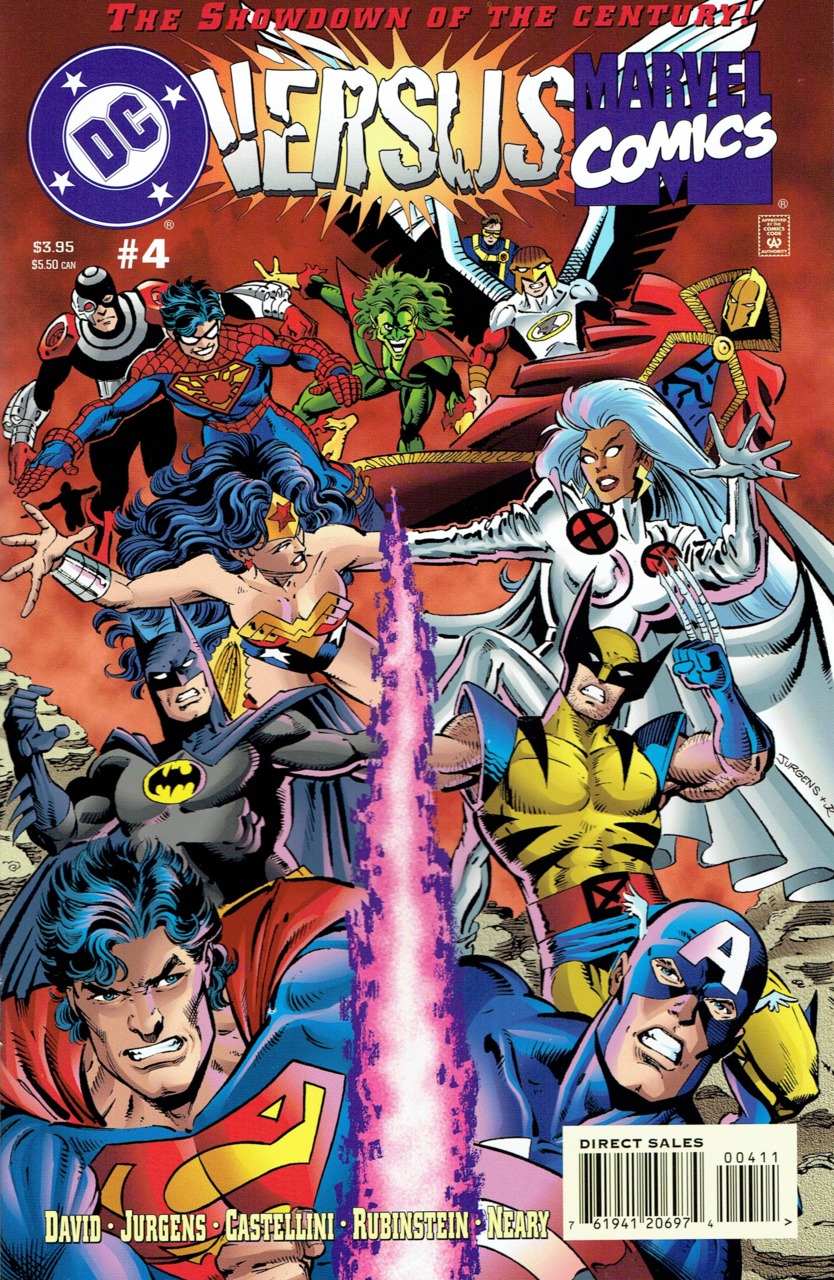
Believe close to it: Marvel and DC did a company-all-embracing, cooperative crossover with dozens of spinoffs. All for the good of the market. IT was the realism in 1996 but seems impossible in today's human race of walled-off IP kingdoms.
"When we did this, it was a comic projection," Bokkos Marz says today. "Merely 20 geezerhood later, we're dealing with multi-billion dollar franchises and IP farms. That's what comics has grown into. I'm non saying that's good or bad; it's just the reality of the situation. These characters now, because of transmedia succeeder, are now worth just untold hundreds of times more money than they were 20 years past. And when they'ray owned by parent mega-corporations, the sort of freedom and fun we had doing it in 1996 is probably a thing of the past."
Or is it?
"If there's a pressing need, it could happen again," Tom Brevoort said in 2015. "The comics diligence tends to work well when we pauperism to, when there's a void to be filled. We seem to react amended to hardship than to good multiplication. But As Marvel and D.C. have become more vertically integrated businesses and not antimonopoly publishing houses, it is more difficult to bridge that gap. Can information technology happen? Sure, it can. But the desire has to be at that place, and it has to be in that respect at a high level. Because the fear now is not just what information technology means for Superman and Spider-Human to team in this risible book, just also what does this have in mind for the moving-picture show properties? People who are involved in many another, many different areas of the business would have to close and see the benefit of so much a thing. It's not impossible, but it is difficult."
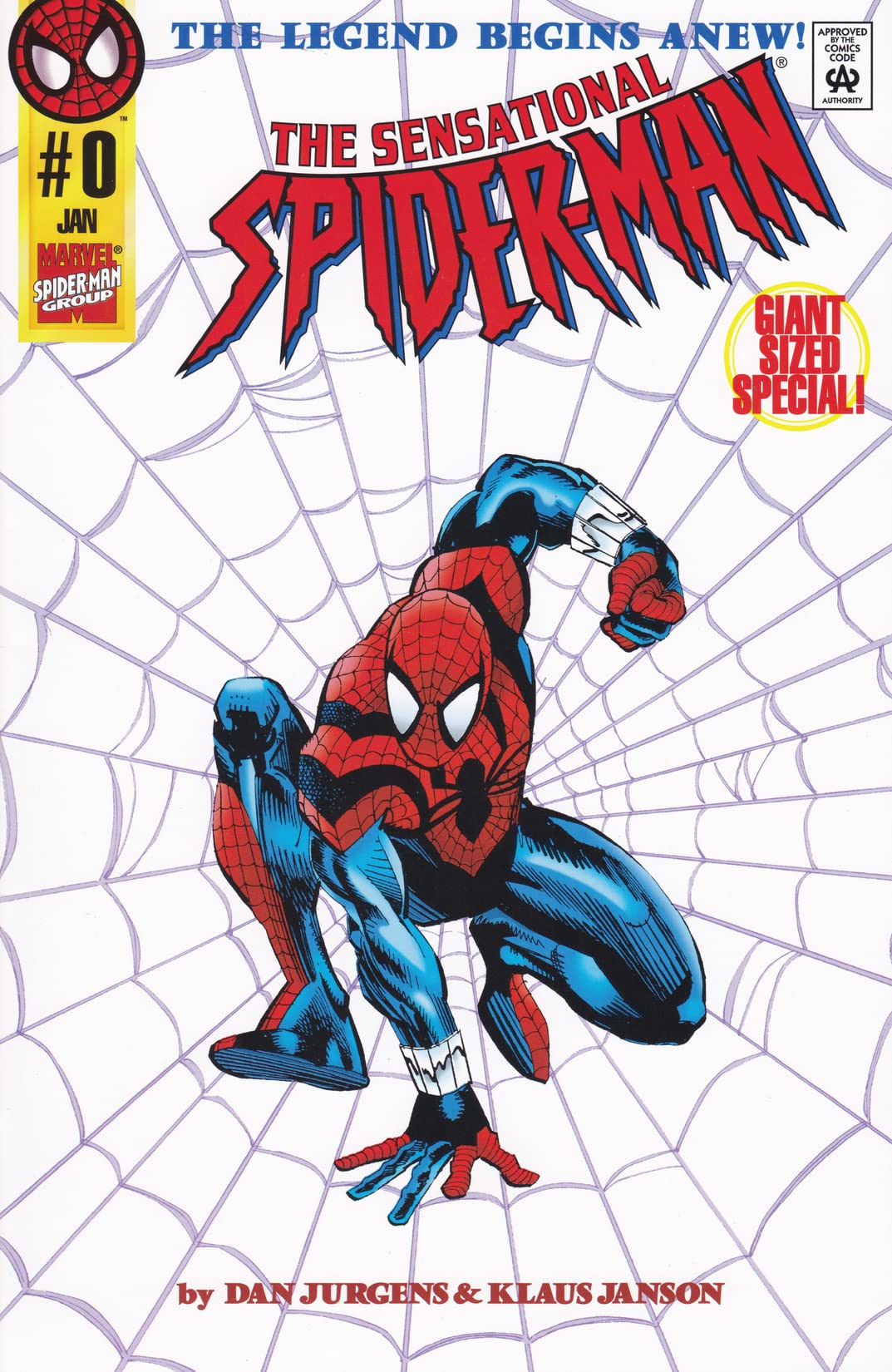
Dan Jurgens himself was an odd footnote in 1996: He was writing Sensational Spider-Man for Wonder and Superman for D.C. at the same clock time, something usually not done these years. It's not just the characters on a short leash - it's the gift, as well.
"I think now, they [Wonder and DC] want to protect its plans a little more they did then, and they'rhenium a bit more concerned with the opinion of 'we're edifice a publication plan for years,'" Jurgens says."And because of that, perhaps they don't want its key players on key books sharing that across the street."
On the Marvel side of the street, 1996 ended poorly. The company entered Chapter 11 (reorganization) bankruptcy in December. Paul Levitz remembers it as a time of great lugubriousness.
"The Marvel bankruptcy was an overpoweringly unknown thing," he says. "Information technology was an leftover bankruptcy because it wasn't that Wonder's business was failing, it was the financial engineering that Ron Perelman had done with the company's funds that had driven them into bankruptcy. IT was sad to watch, and awful torture for the staffers support finished it. I undergo howling obedience for Bob Harras' work in that geological period, property the whole column process together. To this day, I really can't soma impermissible how the hell he did it."
But Levitz also thinks the legacy of 1996 was in the end building a stronger business.
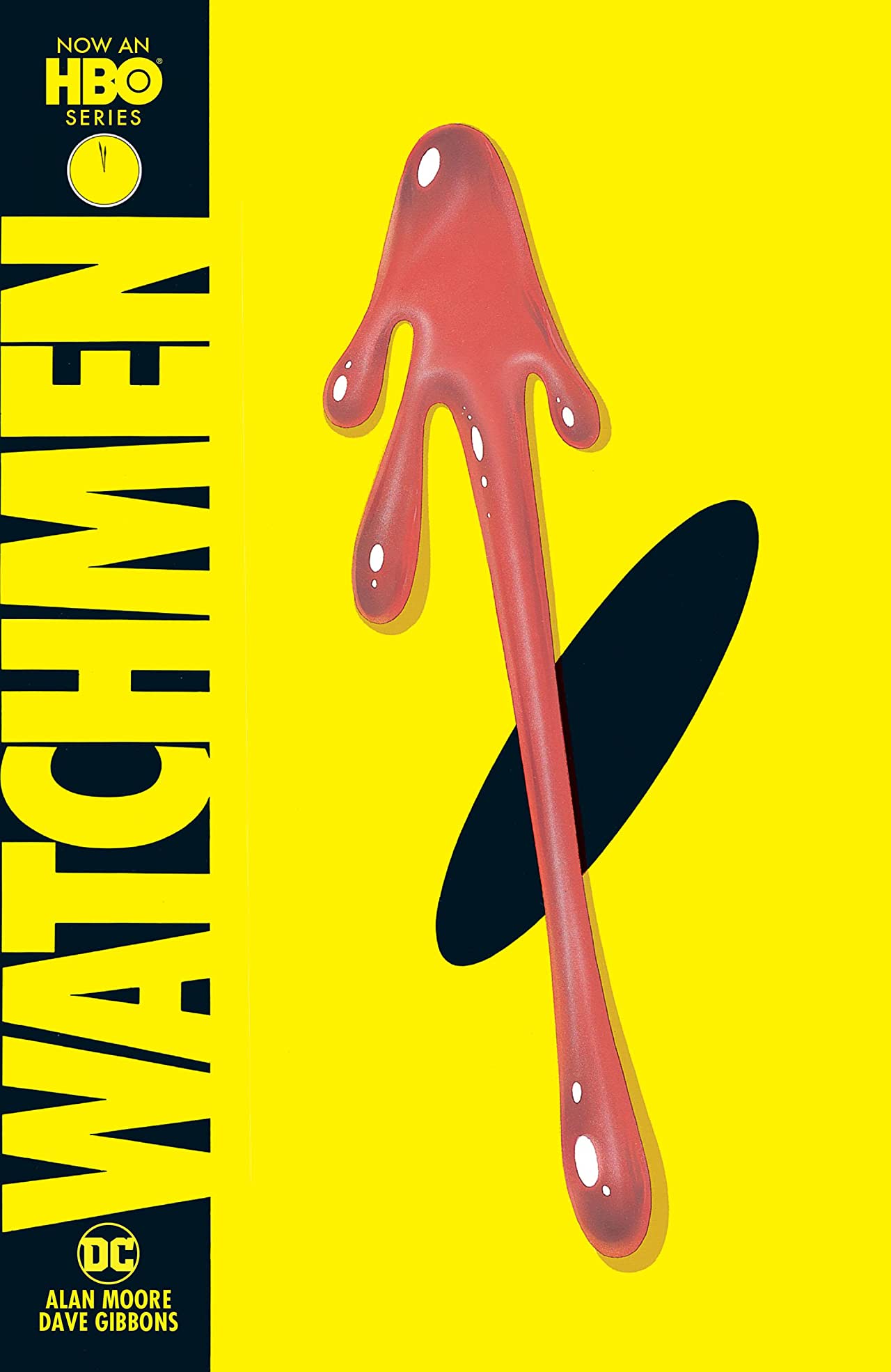
"The most long piece of this is the change in the dispersion system," he says. "In numerous ways, IT facilitated the ontogenesis of the graphic novel. For the most part, in the cold system, a store retailer couldn't edict a copy of the Watchmen [paperback] without ordering a box of 18. And no retail merchant could afford to carry 18 copies of Watchmen at one time, much little a full boxwood of anything that sold inferior than Watchmen."
The brokerage agreements that Steve Geppi alluded to were drafted: publishers would own their ain stock at Baseball diamond's warehouses until the books were sold.
"We premeditated changes in the system so you could develop onesies and twosies in the same way that they could in the traditional book business," Levitz says. "As soon as we changed that, the graphic fresh business started to grow up at a healthier pace."
Scott Lobdell sees now's relaunch and reboot culture (Hello, Whizz Trek; and what the heck, you, too, Space Jam) as having roots in 1996's 'Heroes Reborn.'
"Today it's become almost a monthly event, but at the time it was beautiful staggering, and one could make the argument that this one single event opened the floodgates," Lobdell says. "And it stage set a precedent: Just a a few years later, Marvel gave Pry Palmiotti and Joe Quesada Wonder Knights, and that begat the Ultimate line, which was sort of an in-house version of 'Heroes Reborn.'"
For his division, Dan Jurgens chooses to remember the good multiplication.
"Information technology reminds me how much fun the '90s were!" he says. "I know hoi polloi love to rip 1990s comics in a lot of different ways, but man, you go through information technology, and we had a decade of things just happening at such a tremendous rate that it couldn't help only be fun, for fans, for pros, and for retailers. There was just so much natural event."
Speaking of comic books' crazy 1996, we look at the best Marvel character that debuted in each twelvemonth of the '90s as partly of Wonder Yearbook , our six-part series celebrating 60 decades of the Wonder Universe.

Source: https://www.gamesradar.com/comic-books-crazy-1996-revisited-a-wedding-a-bankruptcy-a-dc-marvel-crossover-more/
Posted by: gonzalezpurping.blogspot.com
0 Response to "Comic books' crazy 1996 revisited: a wedding, a bankruptcy, a DC-Marvel crossover, more - gonzalezpurping"
Post a Comment